0086-18057388688


Linen Cotton Pique: The Complete Technical & Industry Guide
Introduction to Linen Cotton Pique
Linen Cotton Pique represents the synthesis of centuries-old textile craft and modern fiber engineering. By interweaving the breathability of cotton, the silk-like softness of modal, and the controlled elasticity of spandex into a pique knit architecture, this fabric answers the contemporary garment industry's most pressing demands: comfort, aesthetics, durability, and environmental responsibility — all in a single cloth.
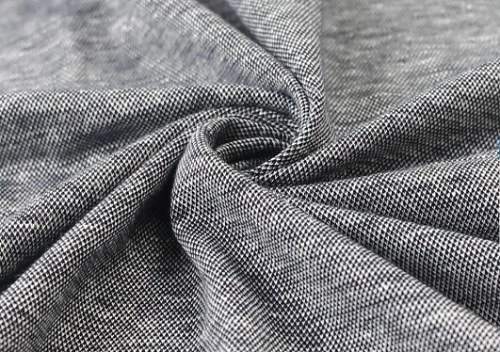
The term piqué (from the French piquer, "to quilt" or "to prick") denotes a woven or knitted fabric with a raised, waffle-like or honeycomb surface. This textural structure is not merely ornamental — it governs the fabric's airflow, moisture management, and drape in scientifically demonstrable ways. In the knit context, pique refers to a double-knit construction that traps air between two knitted layers, boosting breathability and conferring a structured hand-feel that distinguishes it from standard single-jersey fabrics.
Zhejiang Guocheng Linen Knitting Co., Ltd (ZOCHAN) has developed its linen blend pique range as part of a broader commitment to natural-fiber knit innovation. The flagship specification — item DD2010171-5 — exemplifies this philosophy with a precisely engineered 48/48/4 cotton-modal-spandex composition, produced at a 42S yarn count in a 185 cm wide, 200 g/m² construction.
Fiber Composition & Technical Specifications
Fiber Composition Breakdown
Cotton (48%) — Breathable Foundation
Cotton is a seed-hair fibre (Gossypium spp.) with a multi-lobular cross-section that creates micro-channels for air and moisture movement. At 48% of the blend, cotton forms the backbone of the fabric's comfort character. Its hydrophilic nature allows it to absorb up to 27 times its own weight in water, making it highly effective at transporting perspiration away from the skin surface through capillary action. Cotton also contributes to the fabric's natural hand-feel and enhances printability and dyeability across a broad spectrum of reactive and direct dye classes.
Modal (48%) — Softness & Drape Amplifier
Modal is a form of regenerated cellulose fibre produced by dissolving beech wood pulp in a closed-loop spinning process. The resulting fibre has a rounder cross-section than cotton, which imparts a distinctly smooth, almost silky surface texture. Modal's key advantages in this blend include superior colour retention (the round cross-section reflects light uniformly), reduced tendency to pill compared with cotton, and excellent moisture-wicking velocity — moving moisture from the skin surface to the outer fabric layer faster than cotton alone. Its biodegradability places it firmly within the sustainable textile toolbox. ZOCHAN's broader cotton, lyocell, modal, bamboo and polyester range reflects a deep commitment to advanced cellulosic fibre applications.
Spandex / Elastane (4%) — Recovery & Fit
Spandex (brand-name Lycra®, generic: elastane) is a segmented polyurethane fibre capable of stretching to 500–700% of its resting length and recovering completely. At 4%, it is present in "comfort stretch" concentration — enough to give the fabric a noticeable bi-directional give without altering its fundamental natural-fibre hand-feel. This percentage also preserves the fabric's breathability: higher elastane concentrations can begin to impede moisture transport and reduce thermal comfort. The spandex in DD2010171-5 is typically corespun into the yarn structure, ensuring even distribution of elastic recovery across both wale and course directions.
Yarn Count: 42S English Cotton Count
The English Cotton Count (Ne) system expresses yarn fineness as the number of 840-yard hanks that weigh one pound. A 42S count therefore represents a relatively fine yarn — finer than the 30S or 32S counts used in heavier fleece or terry fabrics, but not as fine as the 52S used in premium mercerised products. At 42S, the fabric achieves a smooth, refined surface whilst retaining enough body to support the pique structure without collapsing. This count is well-suited to the medium-weight 200 g/m² target specification.
Performance Properties
Breathability & Moisture Management
The pique architecture's raised cell structure increases the fabric's effective surface area and promotes lateral airflow — a mechanism sometimes called "chimney ventilation" in textile engineering literature. Combined with the moisture absorption capacity of both cotton (standard moisture regain ~7–8%) and modal (standard moisture regain ~10–11%), the fabric excels in active and warm-weather end uses. Perspiration is drawn rapidly toward the fabric surface where it can evaporate, preventing the clammy sensation associated with synthetic-dominated fabrics.
Softness, Drape & Hand-Feel
The 48% modal content elevates softness well above what a 100% cotton pique would deliver. Modal's fibre tenacity in the wet state (approximately 2.0 cN/dtex, significantly higher than cotton's 1.0–1.3 cN/dtex wet) means the fabric maintains structural integrity during washing without becoming progressively rough. The result is a fabric that softens slightly with each launder rather than becoming stiff — a characteristic highly valued by premium casualwear and loungewear producers. Explore ZOCHAN's linen, hemp and blend categories for complementary soft-hand alternatives.
Stretch, Recovery & Dimensional Stability
The 4% spandex core provides bi-directional stretch in the range of 15–25% elongation at body-movement loads, with near-complete elastic recovery. Dimensional stability — the fabric's resistance to permanent deformation — is governed by both the spandex recovery modulus and the structural integrity of the pique knit loops. At 200 g/m², the fabric is heavy enough to resist distortion under standard garment tension whilst retaining a fluid, comfortable give.
Durability & Abrasion Resistance
The pique's double-knit structure creates a denser, more abrasion-resistant fabric than a comparable single-jersey at similar weight. Cotton's cellulose chains and modal's regenerated cellulose both bond well with reactive dyes, maintaining colour vibrancy through repeated mechanical wash cycles. Accelerated wash-durability tests on similar compositions typically demonstrate colour retention ratings of 4–4.5 out of 5 on the ISO 105-C06 scale after 30 cycles.
Sustainability & Certification
Sustainability is no longer a differentiator in premium textile markets — it is a baseline expectation. Zhejiang Guocheng Linen Knitting Co., Ltd has invested significantly in obtaining and maintaining internationally recognised certification standards that validate the environmental and social credentials of its supply chain. The organic content range and recycled content range further demonstrate this multi-axis sustainability commitment.
Certifications Held
| Certification | Full Name | Relevance to Linen Cotton Pique |
|---|---|---|
| GOTS | Global Organic Textile Standard | Ensures organic fibre sourcing and responsible chemical processing throughout the production chain |
| OCS | Organic Content Standard | Verifies the presence and amount of certified organic material in the final product |
| GRS | Global Recycled Standard | Validates claims of recycled input materials; applicable to recycled-blend product lines |
| RWS | Responsible Wool Standard | Governs animal welfare and land management practices for the company's wool and cashmere range |
| OEKO-TEX 100 | OEKO-TEX Standard 100 | Tests for harmful substances across all components; assures consumer safety for skin contact |
Modal's Closed-Loop Production Advantage
Modal's production, using the Lenzing-developed process, recovers approximately 95% of the solvents used in dissolving pulp, creating a genuinely closed-loop system. This contrasts with conventional viscose rayon, which can release harmful carbon disulphide in open-loop production environments. When sourced from certified sustainably managed forests, modal carries a significantly lower lifecycle environmental footprint than synthetics such as polyester, which persists in the environment for centuries and sheds microplastic particles in each wash cycle.
Cotton's Sustainability Pathway
Cotton remains the world's most widely cultivated natural fibre, but its conventional production is water- and pesticide-intensive. ZOCHAN's GOTS certification provides buyers with assurance that the cotton content in applicable product lines has been sourced organically, reducing pesticide load by up to 62% compared with conventional equivalents according to the Textile Exchange Organic Cotton Market Report. The fabric's biodegradability (cotton and modal both degrade in controlled composting environments within months) represents a significant end-of-life advantage over synthetic-dominant alternatives.
Product Applications & Market Segments
Casualwear: Polo Shirts, T-Shirts & Tops
The polo shirt remains the quintessential pique garment. The classic pique texture provides a structured appearance that elevates the polo above basic jersey — it reads as semi-formal in professional contexts yet remains entirely comfortable for leisure. At 200 g/m², DD2010171-5 has sufficient body to hold a clean collar and cuff finish without excessive weight. The spandex component ensures the polo retains its shape at the chest and shoulder after repeated wear.
Activewear: Functional Athleticwear & Yoga
The combination of moisture-wicking cotton-modal and elastic recovery from spandex makes this fabric viable for light-to-moderate intensity activewear. Yoga tops, pilates wear, and athleisure pieces benefit from the fabric's four-way stretch, breathability, and natural-fibre softness against the skin. Unlike synthetic performance fabrics, Linen Cotton Pique does not develop odour as readily — an increasingly important attribute for conscious athletic consumers.
Loungewear & Homewear
The pandemic era accelerated an already-existing shift toward premium homewear. Linen Cotton Pique, with its soft-touch surface and relaxed stretch, translates beautifully into co-ordinated loungewear sets, sleep-adjacent pieces, and at-home casualwear. The textured surface adds visual interest that distinguishes a premium loungewear brand from basic commodity jersey.
Buyers seeking complementary natural-fibre knit options may also explore ZOCHAN's linen cotton single jersey (DD2007236-3, 55/45 linen-cotton, 138 cm, 185 g/m²) for a more rustic aesthetic, or the 100% linen single jersey (DD1911191-4) for pure-fibre applications.
Care & Maintenance
- Machine wash in cold or lukewarm water (max 30°C) on a gentle or delicate cycle. Hot water damages spandex elasticity and may cause shrinkage in the cotton component.
- Use a mild, pH-neutral detergent. Avoid enzyme-based detergents as they can degrade modal and cotton cellulose over repeated cycles.
- Avoid chlorine bleach — it degrades both cellulose fibres and the spandex core, leading to premature yellowing and loss of elasticity.
- Tumble dry on low heat or, for best results, dry flat away from direct sunlight. Flat drying prevents the spandex from being stretched under its own weight during hanging.
- Iron on medium heat with steam to remove pique-structure wrinkles. Avoid pressing directly onto the raised surface — use a damp pressing cloth to preserve texture.
- Store folded rather than hung. The weight of a garment when hung can gradually deform the elastic structure of the spandex over time.
Fabric Comparison: Pique vs Other Knit Structures
| Attribute | Cotton-Modal Pique (DD2010171-5) | Single Jersey (55/45 Linen-Cotton) | Cotton-Polyester Linen Terry | 100% Linen Jersey |
|---|---|---|---|---|
| Structure | Double-knit pique | Single jersey | Terry loop | Single jersey |
| Weight (g/m²) | 200 | 185 | 355 | 150 |
| Stretch | High (4% spandex) | Moderate | Low | Low–Moderate |
| Breathability | Excellent | Very Good | Good | Excellent |
| Texture | Raised pique cells | Flat | Looped pile | Flat / slubby |
| Typical Use | Polo shirts, activewear, lounge | T-shirts, dresses | Sweatshirts, outerwear | Summer tops, resort |
| Related Product | Linen Blend Pique | Linen Cotton Knit | Cotton Polyester Linen Terry | 100% Linen Jersey |
Brands seeking to build a cohesive natural-fibre knit collection may combine pique for structured, semi-formal pieces with linen blend terry for casual outerwear and 100% linen jersey for lightweight summer essentials — all available through ZOCHAN's integrated product portfolio.
About Zhejiang Guocheng Linen Knitting Co., Ltd
Founded in 2011, Zhejiang Guocheng Linen Knitting Co., Ltd (trading as ZOCHAN) was among the first textile manufacturers in China to establish large-scale, dedicated production of knitted linen and linen-blend fabrics. Located at No. 563, Tongde Road, Wutong Street, Tongxiang City, Jiaxing City — Zhejiang Province's historic textile heartland — the company commands a 34,000 m² facility housing spinning, knitting, dyeing, finishing, and quality-control operations under one roof.
The company's product portfolio spans wool and cashmere, linen and hemp blends, cotton-lyocell-modal-bamboo-polyester fabrics, organic content lines, and recycled content lines — forming a comprehensive natural and sustainable knit offer. ZOCHAN's manufacturing capabilities include custom width, weight, and composition specifications to meet the precise technical requirements of international premium brands.
With 70% of finished product exported to Europe and the Americas, ZOCHAN is well-positioned within global sustainable fashion supply chains. The company participates actively in industry news and developments and publishes regular updates through its company news channel.